How to Track AI Search Visibility Trends Over Time
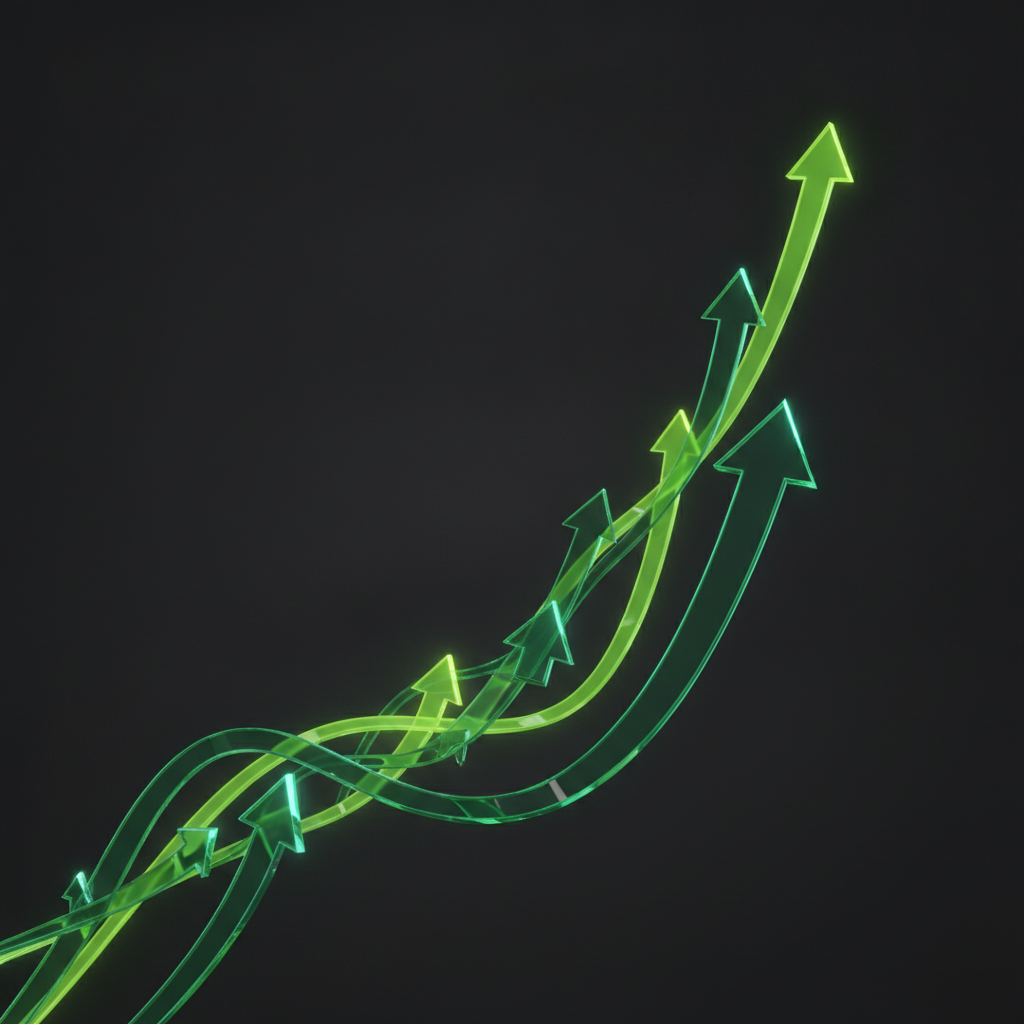
A single AI visibility measurement is a snapshot. A series of measurements over time is a trend, and trends are what drive strategy. Whether your AI citation rate is rising, falling, or flat determines whether your current GEO investments are working and whether you need to act urgently or stay the course. This guide covers how to build and interpret AI search visibility trend data effectively.
AI Visibility Measurement Cadence by Objective
Source: AEO Vision recommended tracking cadence, 2026.
Why Trends Matter More Than Snapshots
AI model updates, competitor content changes, and shifts in buyer query patterns can all move citation rates significantly within weeks. A team that only checks AI visibility monthly may not notice a competitor surging until they have built a significant lead. Trend data with appropriate granularity allows you to catch changes early and respond.
Trends also tell you whether your investments are working. If you published a major content refresh targeting a set of prompts and your citation rate on those prompts improves over the following 6 weeks, that is a direct signal of ROI. Without trend data, you are guessing about the impact of content decisions.
Building Your Trend Baseline
The first 30 days of AI visibility tracking are baseline-building. Run your prompt set daily during this period and compute weekly averages. Expect some noise: AI models generate somewhat variable responses, and a single run of any prompt can produce an outlier result. Weekly averages smooth this out and give you a reliable baseline.
Mark significant events in your timeline: content publications, major competitor announcements, AI model updates, and product launches. These event markers help you attribute citation rate changes to their likely causes rather than treating everything as random variation.
Interpreting and Acting on Trends
Rising trend: your GEO investments are working. Identify which prompts drove the improvement and replicate the successful content approach on other gaps. Flat trend: you may be in equilibrium with competitors, or there may be a ceiling on citation rate in your category for specific prompts. Investigate whether competitors are also flat or whether they are pulling ahead. Falling trend: prioritize diagnosis. Check for model updates that changed citation behavior, competitor content improvements, or technical issues that may have reduced your crawlability.
For the complete measurement framework including share of model and GEO audit integration, see the ultimate GEO audit guide.
Build Your AI Visibility Trend Dashboard
AEO Vision tracks daily citation rates and delivers weekly trend data across all platforms, automatically. Start your 30-day baseline today. Plans start at $9/mo.
Get StartedFrequently Asked Questions
How long does it take to see meaningful AI visibility trends?
You need at least 4 to 6 weeks of consistent data to see reliable trends. The first 2 to 3 weeks help establish your baseline and smooth out day-to-day noise. After that, you can see whether content changes are having the expected effect and whether competitors are gaining or losing ground.
How do AI model updates affect visibility trends?
Significantly. When a major AI platform releases a model update, citation patterns can shift noticeably within days. This is why event-marking in your trend data is essential: if you see a sudden drop that coincides with a known model update, the cause is likely the model, not your content. If the drop happens independently of model updates, investigate your content and technical signals.
Can I export AI visibility trend data for stakeholder reporting?
Yes, with most commercial AI visibility platforms. AEO Vision supports CSV export and API access for data extraction. For regular stakeholder reporting, set up a Looker Studio or Google Sheets integration so trend data flows automatically into your reporting environment. See the Looker Studio integration guide for setup details.
AEO Vision Content Team
Insights on AI search visibility, answer engine optimization, and brand discovery across ChatGPT, Perplexity, Gemini, Claude, and Google AI Mode.
Ready to see how AI perceives your brand?
Track your visibility across ChatGPT, Perplexity, Gemini, Claude, and Google AI Mode.